

French (Fr)English (United Kingdom)
  • PODCAST: Haiti Frontline Report Special
    From Port-au-Prince, this report focuses on MSF's emergency response to the Haiti earthquake; Haitian staff, international staff and patients, share their experiences.
  • Small change can have a profound impact
    Much of the discussion surrounding President Barack Obama's proposed fee on financial institutions to help cut the US deficit overlooks how similar revenue-generating ideas could close the glaring gaps in the global fight against several health emergencies.
  • Haiti: Normal illnesses start to re-emerge among the trauma
    An emerging trend in MSF's work in Haiti is a return to what could be described as normal illnessess and conditions among people coming to the hospitals.
  • AUDIO SLIDESHOW: Emergency surgery in Haiti
    Paul McMaster recently has just returned from Haiti, where he was a surgeon as part of MSF's emergency team. Here, he describes the experience and the difficult decisions that have to be made by medical staff in the aftermath of the earthquake.
  • Somalia: MSF treats 66 women and children injured by indiscriminate shelling
    MSF calls on all belligerents, including the Transitional Federal Government (TFG), the African Union Peacekeeping force (AMISOM) and opposition groups to take all measures to minimise the risk of civilian casualties through a full implementation of the principles of distinction and proportionality.
  • Haiti update: Long term medical consequences becoming clearer
    MSF's emergency wards in Haiti are still treating large numbers of patients but the nature of their injuries is gradually changing.
  • Haiti earthquake: MSF activity timeline
    A chronological overview of MSF's activity in Haiti as the disaster developed. 
  • Burundi: MSF respond to an alarming rise in the incidence of Malaria
    Following a rise in the number of sick people in the northern province of Kayanza, health authorities called on MSF to conduct an assessment. The diagnosis was clear: the incidence of malaria is alarmingly high and MSF is now reinforcing their response in the area.
  • INTERVIEW: Dr Christophe Fournier describes MSF's work in Haiti
    Dr. Christophe Fournier, the International President of Médecins Sans Frontières went to Port-au-Prince to offer his moral support to Haitian staff and emergency teams. Just over two weeks after the earthquake, he gave his impressions to MSF's Avril Benoit.
  • INTERVIEW: A picture of evolving heathcare needs after the Haiti earthquake
    Brigg Reilley is an epidemiologist with MSF. He tells us about the evolving healthcare needs in Haiti and MSF’s current and future priorities.
  • Haiti update: Day 16 and the range of MSF's work is increasing
    Day 16 in Haiti and MSF teams are still treating people with injuries from the quake. The range of work that MSF is now carrying out has been increasing as the needs and priorities shift, but the core medical services still dominate.
  • VIDEO: Inflatable hospital means better conditions for patients in Haiti
    The MSF inflatable hospitals are providing patients in Haiti with a safe, clean and confortable place to receive treatment from MSF teams. The hospital includes two fully-equipped operating theatres in which surgery has already started
  • Haiti update: New facilities and mobile clinics
    The core medical activities in Haiti are still concentrated on treating people who were injured in the quake, with surgery continuing and post operative care expanding.
  • Ingushetia: Solidarity in a forgotten republic
    Fear is dominating people’s lives in the North Caucasus republic of Ingushetia. MSF is one of the few aid organisations still working in the republic and witnessing the severe impact violence is having on the people.
  • VIDEO: MSF's Haitian staff determined to help.
    Despite being victims of the earthquake themselves, MSF's Haitian staff have continued to do everything they can to provide medical assistance in the aftermath of the quake.
  • Haiti update: Surgery begins in inflatable hospital
    The dual pressures of continuing needs for emergency surgery and the growing need for post-operative care are all-consuming work for many Médecins Sans Frontières (MSF) teams in Haiti.
  • Pakistan: MSF shocked by sudden forced evacuation of 7,000 displaced people
    International medical organisation Médecins Sans Frontières (MSF) is deeply shocked by the forced evacuation of about 7,000 displaced people from Munda (Lower Dir, North West Frontier Province).
  • Photos by Ron Haviv of MSF at work in Haiti.
  • Haiti update: More injuries as MSF extends beyond Port-au-Prince
    As the larger MSF hospitals in Port au Prince and their surrounding tent wards continue to treat injured people and carry out operations, the mobile teams that have recently started moving out into the capital and in some places west of Port au Prince are finding significant numbers of people needing medical care.
  • Haitian MSF staff determined to help their people
    MSF’s Haitian staff have saved many lives in the immediate aftermath of the earthquake - their committment and hard work a credit to them, especially under the circumstances.
  • Haiti update: More focus on post-operative care
    The emergency medical work that MSF teams are delivering in Haiti is beginning to shift some of its emphasis towards the next levels of need amongst the people there. In some parts of Port au Prince, the teams are starting to see more people coming to their hospitals who have infections or complications following basic or amateur attempts at treatment in the early days of the aftermath.
  • PHOTO GALLERY: Latest images of MSF working in Haiti.
    Post-operative care is now beginning to get underway.  Exercise for burn victims and psychologists assessing and dealing with patient's psychological needs.
  • GALLERY: MSF in Haiti, eight days after the earthquake.
    Images of MSF's work throughout Haiti.  Since the earthquake more than 900 patients having passed through MSF's surgical facilities. 
  • Haiti update: Mobile clinics and water provision programmes begin
    While surgery and treatment of injuries remains a priority for MSF teams, planning for post-operative care is now under way. Mobile clinics have also started in Port au Prince, Grand Goave and Dufort. Surgical programmes have also started in Leogane and MSF teams have started to supply 7,000 with drinking water.
  • Pakistan: 2,100 displaced children vaccinated against measles
    Over three days, MSF and the Pakistani Department of Health vaccinated 2,100 children in different areas around the Munda displaced persons camp.
  • AUDIO: BBC World at One report on Haiti
    Mark Doyle reports from an MSF operating theatre in  Port-au-Prince on the difficulties of doing surgery. Includes interview with MSF surgeon Geordie Cox.
  • Haiti update: Severe aftershock sends medics and patients back into tents
    The MSF teams have been treating the long queues of patients waiting for treatment and surgery, even as Port au Prince was shaken again by a very substantial 6.1 aftershock yesterday. Some patients were so alarmed by the tremors that they once again had to be taken out of the building and treated in tents.
  • Haiti update: A surgeon's perspective
    Paul McMaster is an MSF surgeon in Haiti, working at the Carrefour hospital. This recording was taken on Tuesday, 19th January over the phone when Paul had finished his shift.
  • HAITI UPDATE: Eight days on, still a desperate need for medical supplies.
    Although aid is beginning to be delivered, bottlenecks remain and people are starting to die of sepsis from infections that go untreated.
  • MSF plane with life-saving medical supplies diverted again from landing in Haiti
    A Médecins Sans Frontières (MSF) cargo plane carrying 12 tons of medical equipment, including drugs, surgical supplies and two dialysis machines, was turned away three times from Port-au-Prince airport since Sunday night despite repeated assurances of its ability to land there. "Priority must be given to medical supplies entering the country,” says Rosa Crestani, MSF medical coordinator.
  • VIDEO: Haiti update - MSF activities in Port-au-Prince
    On January 12th a major earthquake, measuring 7.3 on the Richter scale, struck Haiti. Despite two MSF hospitals collapsed and 52 staff reportedly missing, MSF teams are providing immediate medical assistance to the injured.
  • Haiti update: MSF's work seven days on.
  • PHOTO GALLERY: MSF at work in Haiti.
    Photos by Julie Remy from MSF projects in Haiti, including the arrival of MSF's inflatable hospital.  Surgery is continuing at a number of sites.
  • VIDEO: Channel 4 Haiti report
    Channel 4 Haiti report from 18th January 2010. Covers arrival of aid, MSF's medical programmes, insecurity and for how much longer there is hope of finding people alive beneath the rubble.
  • PHOTO GALLERY: MSF at work in Haiti.
    MSF teams at work in Haiti, treating those injured by the earthquake. MSF has several sites for surgery and all are running, as much as possible, 24 hours a day.
  • Haiti update: MSF scales up operations and assesses needs in new areas
    Six days after the earthquake, international support is slowly appearing in Port-au-Prince and Haiti. Most of the needs are far from being covered. The most severe cases can hardly be taken car of due to lack of structures offering good surgical conditions. Although some markets have reopened, food and water remain an issue. Aftershocks and people leaving buildings in a rush are still daily scenes. The population is getting frustrated, and tension is on the rise.
  • Haiti update: Running operating theatres around the clock
    On the fifth day on their response to the disaster in Haiti, the MSF teams remain focused on trying to cope with the huge demand for life-saving surgery from those who suffered terrible injuries in the quake. They are doing that by stretching their existing resources, running operating theatres to the limit by working around the clock, while at the same time trying to create more capacity by finding new premises and transporting in mobile structures.
  • PRESS: MSF demands deployment of life-saving medical equipment given priority
    Médecins Sans Frontières cargo plane with full hospital and staff blocked from landing in Port-au-Prince. 1000s of wounded waiting for vital surgical operations.
  • Haiti update: Staff say they have never seen so many serious injuries
    The surgical units, which MSF set up in Port-au-Prince, continue to work around the clock to treat the vast numbers of patients with injuries from the earthquake. Prioritising the most serious cases, the teams have been performing ceasarian sections and amputations. Experienced MSF medical staff say they have never seen so many serious injuries.
  • Haiti update: Surgery starts and new staff arrive
    Around 2,000 patients have been treated so far at MSF locations. Teams are still seeing patients pour in.  People have started fleeing the city. Public parks and open space are crowded with those who have stayed, but have either lost their houses or are afraid to go back to buildings. Thousands have gathered in one of the main squares, the Champs de Mars, in front of the collapsed presidential palace.
  • Haiti: Logistics of MSF’s response
    Laurent Dedieu is a logistics supervisor for Médecins Sans Frontières (MSF) projects in Haiti. Since the earthquake that hit Port-au-Prince on January 12, he has been in frequent contact with the teams on the ground and helping to organise the logistics of MSF’s response. Here he describes the logistical challenges the teams are dealing with right now.
  • Inflatable hospitals: A fast and effective surgical response
    For over four years, MSF has been equipped with inflatable hospitals in which it is possible to rapidly install surgical facilities, intensive care units and hospital beds. Dr. Mego Terzian, MSF deputy emergency coordinator explains.
  • Haiti update: Surgical services start in Port-au-Prince
    The MSF teams in Port-au-Prince are focussing their attention now on expanding their surgical capacity and two operating theatres are now working to help 300 patients who have been transfered to the MSF facility at Choscal hospital in the Cite Soleil district. The rest of the medical staff are still responding to the hundreds of people at their clinics who need immediate first aid and more basic care for their wounds.
  • PHOTO GALLERY: 24-hours after the Haiti earthquake (from Reuters) 
    Tens of thousands were feared dead in Haiti's catastrophic earthquake, with many buried or trapped in demolished schools, hospitals and shanties.
  • Haiti update: Sites found for surgical work as patients pour in
    Reports from the field say that at least 1,500 patients have been treated so far at MSF locations. However, patients are still pouring in and surgery needs are huge.
  • INTERVIEW: Dr Greg Elder, 24 hours after the earthquake in Haiti
    On tuesday 12th January, a 7.0 magnitude earthquake struck the country of Haiti. This interview with Dr. Greg Elder gives us an update on the situation.
  • PHOTO GALLERY: Haiti earthquake photo update (from Reuters)
    Following the devastating earthquake in Haiti on the 12th of January, MSF medical teams in Port-au-Prince have been treating large numbers of people.
  • Haiti update: Over 1000 patients treated, more staff and supplies imminent
    The MSF medical teams in Port-au-Prince have been treating very large numbers of people who come to them with fractures, head injuries and other major trauma from the quake. Well over a thousand patients been through the four tented facilities that MSF has set up near the damaged buildings that it used to work in.
  • VIDEO: Haiti earthquake update
    Paul McPhun, MSF operations manager, gives a briefing here on the situation for MSF and our patients in Haiti.
  • MSF aid worker rescued from Haiti rubble after almost 24 hours
    MSF aid worker Danielle Trépanier was rescued on Wednesday afternoon (13th January) after almost 24 hours under the rubble of a collapsed staff-house.
  • AUDIO: Haiti earthquake briefing
    Paul McPhun, MSF operations manager, gives a briefing here on the situation for MSF and our patients in Haiti.
  • Haiti earthquake update
    Following the earthquake that struck Haiti yesterday, the three MSF hospitals and clinics in Port-au-Prince have suffered significant damage, patients and staff have been injured and hundreds of wounded have been arriving at the MSF offices and hospitals overnight
  • PHOTO GALLERY: Haiti earthquake photos (from Reuters)
    On January 12, a magnitude 7.0 quake struck about 10 miles (15 kilometers) southwest of the Haitian capital, Port-au-Prince. MSF has staff on the ground and is sending additional staff and supplies to Haiti urgently. The images below have been supplied by Reuters news agency. Please note, some are very distressing.
  • MSF responding to devastating earthquake in Haiti
    On January 12, a magnitude 7.0 quake struck about 10 miles (15 kilometers) southwest of the Haitian capital, Port-au-Prince. Médecins Sans Frontières (MSF) teams on the ground have witnessed significant damage to its medical facilities, injuries to patients and staff and an influx of wounded towards these hospitals in the capital.
  • Italy: Violence exposes neglect and exploitation of seasonal migrant workers
    The recent violence in Calabria, Southern Italy, has placed the plight of the region’s seasonal migrant workers in the international spotlight. MSF denounces the ongoing neglect and exploitation of this vulnerable group.
  • INTERVIEW: After fleeing conflict in DRC, thousands face precarious conditions
    Laurent Sury, deputy manager for emergencies, recently assessed the situation in the field for these refugees and explains MSF's activities.
  • Burundi: MSF emergency centre on brink of collapse due to floods
    Heavy rains in the province of Bujumbura Rural, Burundi, caused Rusizi River to burst its banks and flood the MSF Centre for Obstetrical Emergencies in Kabezi (‘CURGO’), where 42 women and 10 newborns were hospitalised.
  • PHOTO GALLERY: Medical work in Galcayo, Somalia
    Photographer Jan Grarup visited South Galcayo Hospital in Somalia to witness MSF's work at first hand
  • Despite clashes, MSF continues activities in Galgadud Region, Somalia
    In response to severe drought conditions, MSF started supplying water on 23rd December, in order to cover the needs of people in villages surrounding  Dhusa Mareb and Guri-el in the Galagadud Region of Central Somalia.
  • Thailand: Thai government forces repatriation of Hmong refugees back to Laos
    Thai authorities have begun expelling the remaining 4,000 Hmong refugees in the Huai Nam Khao camp back to Laos. MSF has denounced the forced repatriation policy. MSF was forced to end its activities in the camp in May 2009
  • January - June 2009: MSF activities in the Gaza Strip
    During the war, three expatriates (a project manager, a nurse and a doctor) and 60 Palestinian health workers struggled to aid the population, in the face of fighting and the dangers involved in travelling through the area.
  • Gaza: Looking back at a human catastrophe
    Looking back on the December 2008 Israeli military offensive in Gaza and its devastating consequences.
  • INTERVIEW: Head of mission on the situation in Gaza
    The Israeli military operation, 'Cast Lead', was launched in the Gaza Strip on 27th December, 2008. Eight months later, Franck Joncret, MSF head of mission in the Palestinian Occupied Territories, provides an update on the current situation and MSF's response. 
  • MSF closes programmes in Turkmenistan after 10 Years
    Despite urgent health needs MSF stops activities as the last international NGO. The international medical humanitarian organisation, MSF, has closed its medical activities in Turkmenistan after ten years of working in the Central Asian country.
  • 'Top ten' humanitarian crises
    Civilians attacked and cut off from aid in conflict zones, plus the ongoing neglect of diseases, were among the worst emergencies in 2009, MSF reported this year in its annual list of the "Top Ten" humanitarian crises.
  • Photo Gallery: Top Ten Humanitarian Crises 2009
    MSF began producing the "Top Ten" list in 1998, when a devastating famine in Sudan went largely unreported. Based on MSF’s  work, the list aims to generate awareness of the severity of these crises. This year's list includes Sri Lanka, Congo, Somalia, Yemen, Sudan, Pakistan, Afghanistan, malnutrition, HIV/AIDS and neglected diseases.
  • Bearing the brunt of migration policies
    MSF urges European governments to respect life, dignity and healthcare of migrants and asylum seekers
  • New hope for people living with HIV
    In a decisive step to improve access to medicines in the developing world, the Executive Board of UNITAID, the international health financing agency, has given the green light for a patent pool for AIDS medicines to open for business.
  • Make It Happen: Campaign success!
    Great news: thanks in no small part to the participation of thousands of individuals in the Make It Happen Campaign, UNITAID has announced the creation of the Patent Pool for AIDS medicines.
  • VIDEO: Facing reality in Southern Sudan
    As incidents of violence increase in Southern Sudan, the the crisis there worsens. Getting either food or healthcare is extremely difficult for people, especially those who have been forced to flee their homes. MSF is calling for more focus on emergency humanitarian assistance.
  • Inadequate aid as violence escalates Southern Sudan emergency
    The people of Southern Sudan are trapped in a worsening crisis, following the most violent year since the 2005 peace agreement that ended more than two decades of civil war with the North. However, the response to the escalating emergency is inadequate, says MSF.
  • Pakistan: Where childbirth is a deadly part of life
    On a dusty road to the Afghanistan border, between horn blasts from passing trucks, the cries of newborn babies can be heard from inside the MSF birthing unit in Kuchlak...
  • Empty hospital beds in the capital of Helmand, Afghanistan
    MSF’s Christopher Stokes, General Director , explains why it is crucial for MSF to base its activities in Afghanistan on three main principles....
  • Pakistan: MSF requests authorisation to provide for displaced people
    MSF, is ready to set up an emergency medical programme to provide free treatment to patients in Dera Ismael Khan district and is requesting authorisation from the Pakistani authorities to do so.
  • Pakistan: “Many have this disease in the village, mostly the children”
    MSF started operating in the Mardan District, Pakistan, in response to the arrival of hundreds of thousands of people fleeing heavy fighting started between Pakistani military forces and fighters from armed opposition groups in the Swat District in May 2009.
  • VIDEO: Inside Pakistan - Challenges faced when providing medical care
    Following 15 months in Pakistan as head of mission for MSF, Fabien Schneider describes some of the main issues faced when providing medical care to the conflict affected population in Pakistan.
  • Somalia: MSF laments attack on medical students' graduation
    MSF is deeply saddened by the recent attack during the graduation of medical students from Benadir University and sends its thoughts and condolences to the families and friends of those who have suffered as a result of this tragic event.
  • Living in fear: healing mental scars in Rio's slums
    Complexo do Alemão, like hundreds of slums in Rio de Janeiro, is controlled by gangs of armed drug dealers and residents live with constant fear .
  • VIDEO: Month in Focus, November 2009
    This “Month in Focus” covers healthcare in the Philippines, distribution of winter kits to Afghan migrants, MSF's call for sustained funding for HIV/AIDS and research into Tuberculosis, and MSF’s role in medical innovation.
  • Colombia: Few alternatives for treatment of Chagas
    MSF mobile clinics in remote areas of Colombia have now integrated Chagas screening and treatment into their healthcare services. Despite serious health implications, many do not even know they are infected.
  • Zimbabwe: At the end of a fragile food chain
    The focus of MSF’s prison programme is the provision of basic healthcare, food and improved water and hygiene facilities. MSF's Pip Millard gives us an insight into the project and the conditions inmates have been facing.
  • Somalia: Round-the-clock care saves lives
    Nightime telephone calls for urgent operations are a routine part of Dr. Maslah’s work, as South Galkayo hospital, Somalia, is the only one to provide free emergency surgery in the area.
  • World Aids Day: Stories from South Africa
    The Stories from South Africa mini site tells the stories of people in Khayelitsha who are living with HIV/AIDS and how their lives have changed with the introduction of anti-retroviral drugs and TB treatment. Listen to their stories, their hopes and their dreams, as they deal with the difficulties in facing poverty, marginalisation and stigma. 
  • VIDEO - Drawing the war - Condition: Critical
    Watch the all too common story of a child, forced to become a soldier, through his words and drawings. Then go to Condition: Critical to leave a message of support for him and all the children like him who have been forced to grow up in such a horrific way. MSF will take a selection of these messages to Congo (DRC) as a show of support and solidarity.
  • VIDEO - Bahati's story - Condition: Critical
    Bahati's story is the third of four to be released from the last chapter of Condition: Critical, a year long MSF project aiming to give a voice to the poeple living through the war in Eastern Congo (DRC). Please watch the video, then visit the Condition: Critical website to leave a message of support for the people of Eastern Congo.
  • VIDEO - Mishoka's story - Condition: Critical
    Mishoka's story is the second of four to be released from the last chapter of Condition: Critical, a year long MSF project aiming to give a voice to the poeple living through the war in Eastern Congo (DRC). Please watch the video, then visit the Condition: Critical website to leave a message of support for the people of Eastern Congo.
  • VIDEO - Francoise's story - Condition: Critical
    Francoise's is one of the last stories to be released from Condition: Critical, a year long MSF project aiming to give a voice to the poeple living through the war in Eastern Congo (DRC). Please watch the video, then visit the Condition: Critical website to leave a message of support for the people of Eastern Congo.
  • Republic of Congo: Refugees fleeing the DRC are in dire need of assistance
    Approximately 24,000 refugees recently arrived in northern Republic of Congo. They are fleeing the conflict in the Democratic Republic of Congo (DRC). MSF is currently the only humanitarian aid organization providing assistance.
  • The Positive Ladies Soccer Club
    An MSF documentary featuring a group of HIV positive ladies in one of the poorest township’s of Zimbabwe, Epworth, who decide to form a football team to challenge the stigma of HIV.
  • Doctors without patients: MSF fears for migrants forced back to Libya
    Since the new government policies were implemented earlier this year, many boats carrying migrants have been reportedly intercepted at sea and forced back to Libya. Migrants are being denied the opportunity to land in Europe and receive much-needed humanitarian assistance. They are also exposed once again to the violence and abuse endured while trying to reach Italy. 
  • Five NGOs open a refugee camp in the heart of Brussels
    Currently more than 1000 asylum seekers in Brussels have nowhere to go and are surviving on the streets, a crisis which has been dragging out for months and is only getting worse. With winter rapidly approaching, and in the absence of concrete solutions from the authorities, five NGOs, including MSF have decided to build a refugee camp in the heart of Brussels to provide urgently needed care for asylum seekers.
  • World Food Summit fails to address childhood malnutrition
    As the World Food Summit draws to a close, the international community once again provides no commitments on tackling childhood malnutrition. In 2008 alone, In 2008, MSF treated more than 300,000 malnourished children worldwide.
  • Sierra Leone: Lives are lost as poor are asked to pay for healthcare
    MSF’s experience in Sierra Leone has shown that patient fees act as a major obstacle to getting healthcare and lives that could be saved are lost every day. Necessary steps need to be taken now to improve the access to healthcare of the people in need in this desperately poor country.
  • El Salvador: MSF helps the survivors of Hurricane Ida
    Last weekend, over 150 people were killed and more than 13,000 were displaced by the intense rains and floods which hit El Salvador after Hurricane Ida swept through the country.
  • Cape Verde: Biggest recorded dengue fever outbreak in Africa
    The Cape Verde Ministry of Health has reported 13,187 suspected cases of dengue fever in four islands within the archipelago between 1st October and 9th November.
  • Rome food summit to fail if governments spend peanuts on childhood malnutrition
    Funding by rich countries to combat malnutrition has remained flat for seven years, according to a report released today by Médecins Sans Frontières (MSF). This barely accounts for three percent of the funds needed to reduce the 3.5 to 5 million annual deaths of children under five attributed to malnutrition.
  • VIDEO: Month in Focus, October 2009
    This edition of Month in Focus covers MSF's work with the floods in South East Asia, cholera in Papua New Guinea, continuing activities in Iraq, malnutrition in Central African Republic and with victims of violence in Congo (DRC).
  • Lebanon: Breaking the mental illness taboo
    Read about MSF's community mental health project in Lebanon, including testimonies from Farah Malyani, a Palestinian psychiatric nurse and Salwa, a Lebanese patient.
  • MSF welcomes detention centre closure in Greece
    Médecins Sans Frontières welcomes the decision to close down the detention centre in Mitilini island as a necessary first step towards more humane treatment of undocumented migrants and asylum seekers.

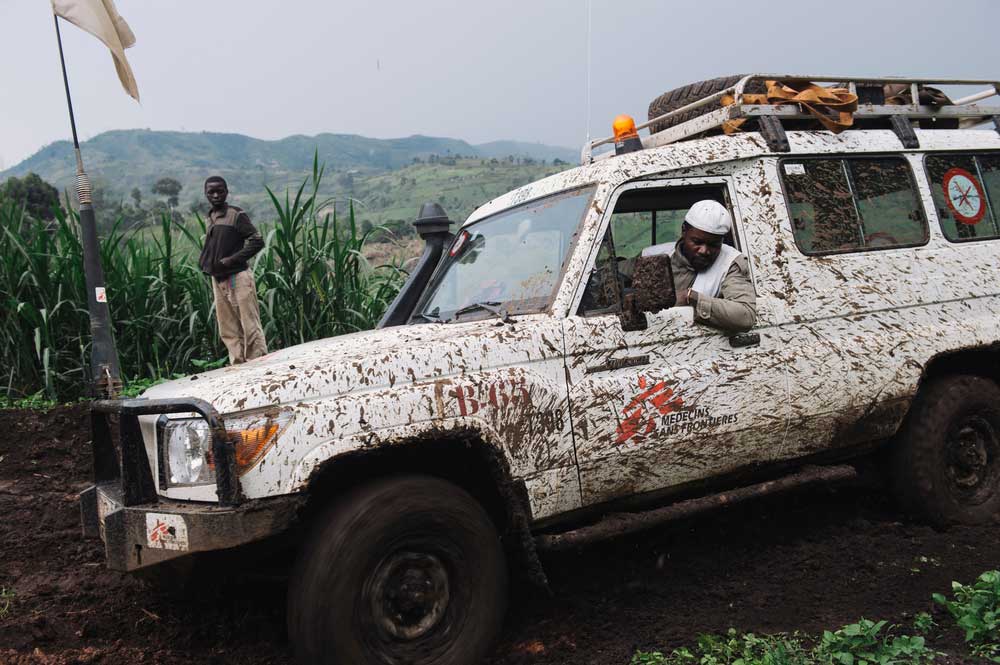
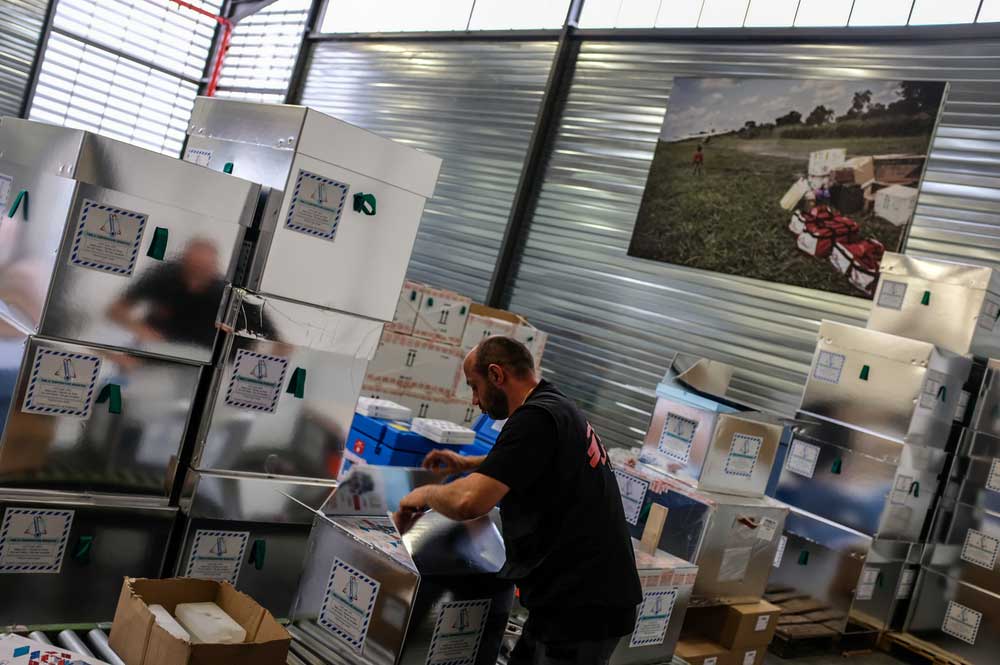
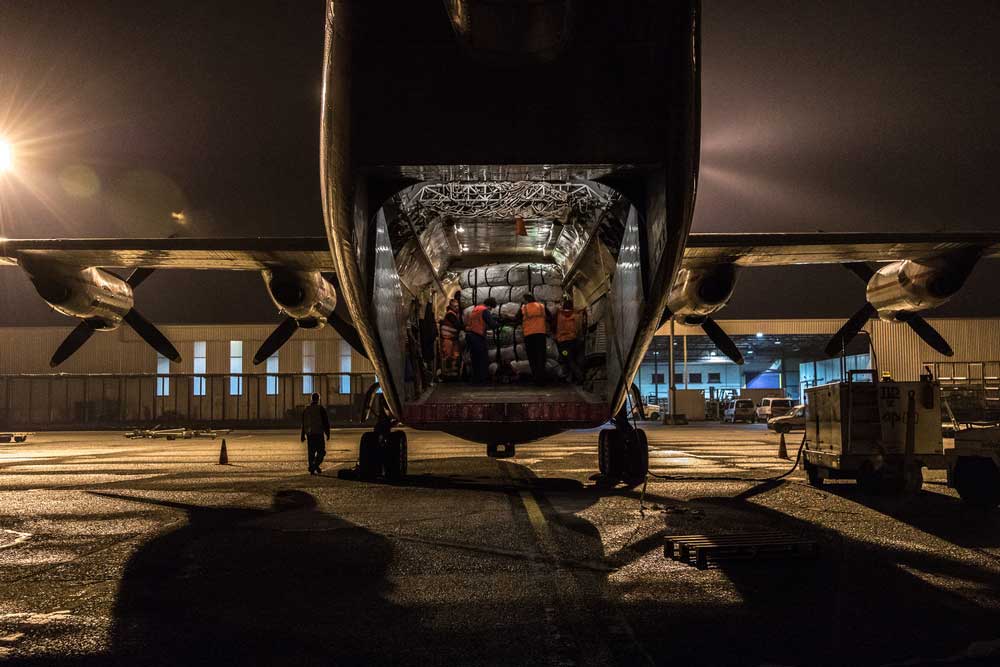
MSF Logistique, a non profit-making association (under french 1901 law), is one of the  supply centres for Médecins Sans Frontières (MSF) MSF Logistique supplies MSF missions with  medication and equipment for ongoing programs and emergency actions (displaced populations, epidemics, natural disasters, war zones, ...)

MSF Logistique handles all the roles in the supply chain, from purchases to goods transportation, and can also offer services linked to its activity. MSF Logistique is approved as a pharmaceutical establishment and bonded warehouse.


MSF Logistique recruits : Visit the recruitment area to know the current vacant position and also to send us spontaneous applications and requests for training course.

Extension project of MSF Logistique : With the evolution of demand, MSF Logistique must make evolve its structure in order to put its means in adequacy with the international request. Within this framework, a project of extension of the storage surface has been initiated for a few years.

Openning of the new MSF Logistique website : The MSF Logistique website makes new skin ! Having several platforms of access, it makes possible to any user (public or professional) to find information needed at any time.


MSF Logistique ...